


Your Brand Isn't the Problem. Your System Is.
When growth stalls, the instinct is to rebrand. A new logo fixes the surface, not the system underneath it.
A professional services firm we spoke with had rebranded twice in six years. New logo, new deck template, new website, both times. Both times, within a year and a half, the same complaint resurfaced internally: "we don't look as serious as the work we actually do." Nobody on the leadership team could explain why a second expensive rebrand had produced the same problem as the first — because nobody had ever asked whether the logo was the actual issue in the first place.
It wasn't. It never is, on its own.
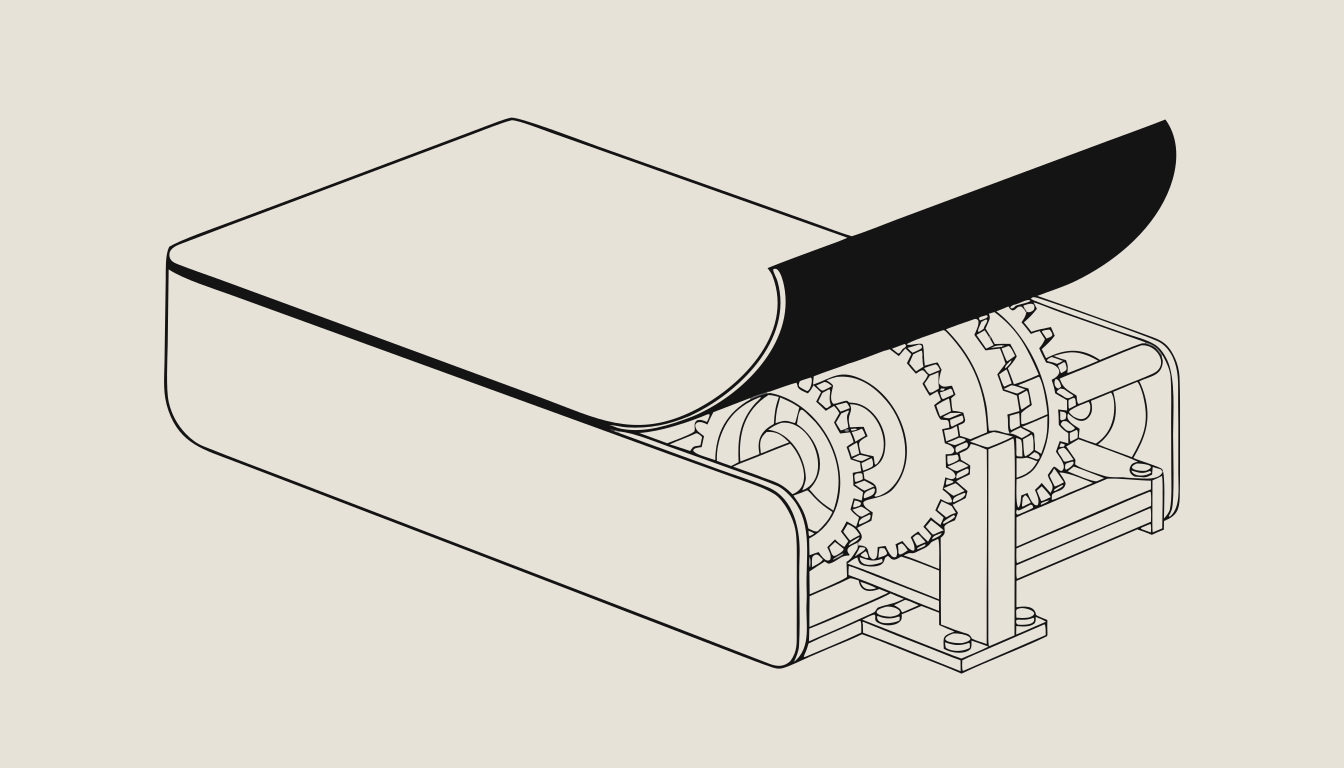
The reach-for-a-rebrand reflex
When growth stalls, or a company starts sensing that the market doesn't fully "get it," there's a predictable reflex: something's wrong with how we look, so let's fix how we look. A new visual identity, a refreshed website, updated messaging. It's an understandable instinct — it's the most visible, most controllable lever available, and a design project has a clear start and end date in a way that "fix our positioning" doesn't.
The trouble is that a visual identity is an output, not a cause. It's the last stage of a much longer chain: what the company actually stands for, how that gets translated into language, how consistently that language gets applied across every touchpoint, and how the operating discipline behind it holds up under pressure. A rebrand touches exactly one link in that chain — the most visible one, and the one least responsible for why the perception gap opened up in the first place.
Why the second rebrand looks like the first
This is why the pattern above is so common: a company rebrands, feels better for a few months because everything looks new, and then the underlying gap — the positioning that was never actually sharp, the inconsistency between what sales promises and what delivery does, the lack of any real system governing how the brand shows up — reasserts itself. The new logo didn't cause the problem and couldn't have fixed it. It just delayed the moment the problem became visible again.
A rebrand without a system underneath it is a fast way to spend real money arriving back at the same place in eighteen months, in a nicer typeface.
What "the system" actually means
The system is the set of decisions and disciplines that determine how a brand behaves everywhere, consistently, regardless of who's making a given decision on a given day. It includes the positioning itself — one sentence, defensible, specific to this company and not swappable with a competitor's. It includes how that positioning translates into every piece of client-facing language, so a proposal and a LinkedIn post and a pitch deck all sound like the same company said them. It includes the operating standard that governs what gets shipped and what doesn't, so quality doesn't depend on which team member happened to be free that week.
None of that is visual. All of it determines whether a visual refresh actually holds, or quietly erodes the moment the initial enthusiasm wears off.
Where this shows up hardest
Real estate and property brands feel this acutely — a beautiful new identity sitting on top of an inconsistent sales process reads as more attractive marketing around the same underlying experience, and buyers at the price point that matters notice the gap quickly. Financial services firms feel it too: compliance-driven caution means the visual system is often the only thing that ever gets deliberately designed, while the actual client experience — the emails, the onboarding, the follow-through — was never built with the same intent, and it shows.
The fix isn't a third rebrand. It's building the system first — positioning, message architecture, operating standard — and treating the visual identity as the last mile of that work, not a substitute for it.
The question worth asking before the next rebrand
Not "does our brand look outdated," but "if we changed nothing visual and only fixed the system underneath it, would the actual complaint go away?" If the honest answer is yes, the visual refresh can wait. If the answer is genuinely no — if the visual identity really is the whole gap — that's rare, and worth confirming before spending on it again.

